

Parallel Circuit
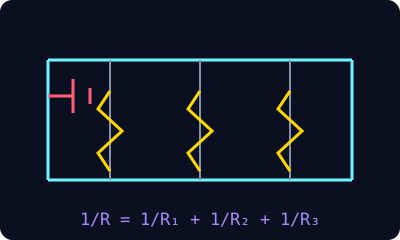
Learning Objectives
- Students will be able to analyze parallel circuits with multiple branches
- Students will be able to calculate branch currents and total resistance
- Students will be able to compare parallel and series circuit behaviors
Core Concepts
- Parallel branches
- Current division
- Equivalent resistance
Formulas
$$\frac{1}{R_{total}} = \frac{1}{R_1} + \frac{1}{R_2} + \frac{1}{R_3} + \cdots$$
Total resistance in a parallel circuit
$$V = V_1 = V_2 = V_3 = \cdots$$
Voltage is the same across all parallel branches
$$I_{total} = I_1 + I_2 + I_3 + \cdots$$
Total current equals sum of branch currents
Units
| Ohm | Ω |
Interesting Fact
Parallel wiring is much safer than series for household use because each device is protected
Key Scientist
Gustav Robert Kirchhoff
Formulated Kirchhoff's Laws applicable to parallel circuits
Ancient Wisdom
Parallel paths reflect the concept of many roads to enlightenment found in Buddhist and Hindu philosophy — multiple valid approaches to spiritual truth.
Want to truly master this? Try the interactive lesson!
Start Lesson