

Power
Learning Objectives
- Students will understand power as rate of energy transfer
- Students will calculate power from work and time
- Students will distinguish average and instantaneous power
Core Concepts
- Power: rate of doing work
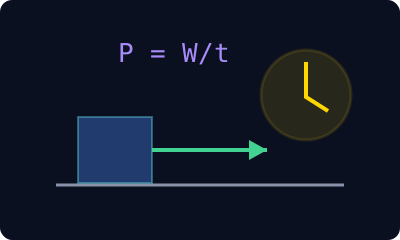
- P = W/t (work per unit time)
- Power is measured in watts
Formulas
$$P = \frac{W}{t}$$
Average power equals work divided by time
$$P = Fv$$
Power equals force times velocity
Units
| watt | W |
| kilowatt | kW |
| horsepower | hp |
Interesting Fact
The watt is named after James Watt, the steam engine engineer
Key Scientist
James Watt
Improved steam engines; the watt unit is named after him
Modern Research
Power efficiency is central to modern energy technology; renewable energy goals focus on increasing power generation from sustainable sources.
Want to truly master this? Try the interactive lesson!
Start Lesson