

The International System of Units (SI)
Learning Objectives
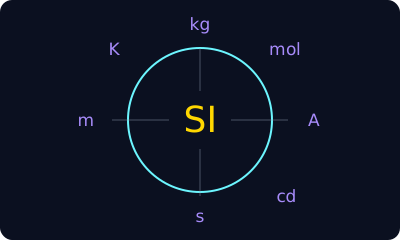
- Students will be able to list the seven SI base units
- Students will understand SI prefixes and use them in conversions
- Students will appreciate the international standardization of measurements
Core Concepts
- Seven base units of the SI system
- SI prefixes (kilo-, centi-, milli-, micro-, nano-, etc.)
- Advantages of a standardized universal system
Units
| meter | m |
| kilogram | kg |
| second | s |
| ampere | A |
| kelvin | K |
| mole | mol |
| candela | cd |
Interesting Fact
SI was formally established in 1960 and has been refined many times since
Key Scientist
Gabriel Mouton
Proposed the decimal metric system in 1670, precursor to SI
Philosophy
The SI system is a practical system of measurement units based on fundamental natural constants, rather than arbitrary standards. This allows for universal agreement and consistency in measurement across the world.
Want to truly master this? Try the interactive lesson!
Start Lesson