

Wavelength
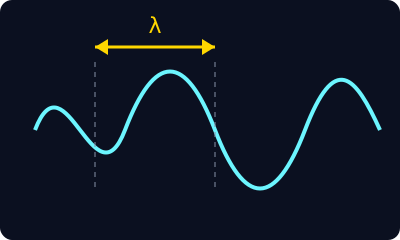
Learning Objectives
- Students will be able to define and measure wavelength
- Students will be able to relate wavelength to frequency and wave speed
- Students will be able to compare wavelengths in different media
Core Concepts
- wavelength
- distance_between_crests
- spatial_period
- wave_compression
Formulas
$$\lambda = \frac{v}{f}$$
Wavelength equals wave speed divided by frequency
$$v = \lambda f$$
Wave speed equals wavelength times frequency
Units
| meter | m |
| nanometer | nm (10⁻⁹ m) |
| micrometer | μm (10⁻⁶ m) |
Interesting Fact
Tuning a radio involves adjusting to different wavelengths, not frequencies; a 100 FM station broadcasts at about 3 meters wavelength
Key Scientist
Christiaan Huygens
Used wavelength to explain wave phenomena including diffraction
Modern Research
Understanding wavelength is crucial for designing antennas, fiber optic communications, and X-ray crystallography.
Want to truly master this? Try the interactive lesson!
Start Lesson